
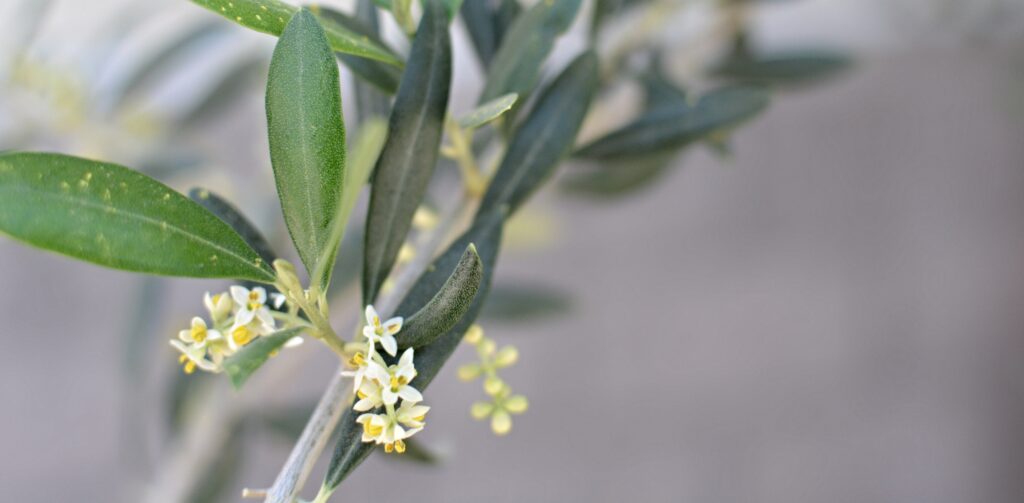
Pollination…it’s a beautiful thing! In honor of our annual Olive Blossom Festival (always held in April), where we celebrate the awesome blossoms on our olive trees, we decided that it would be a good idea to teach you how an olive actually becomes an olive – the act of pollination.
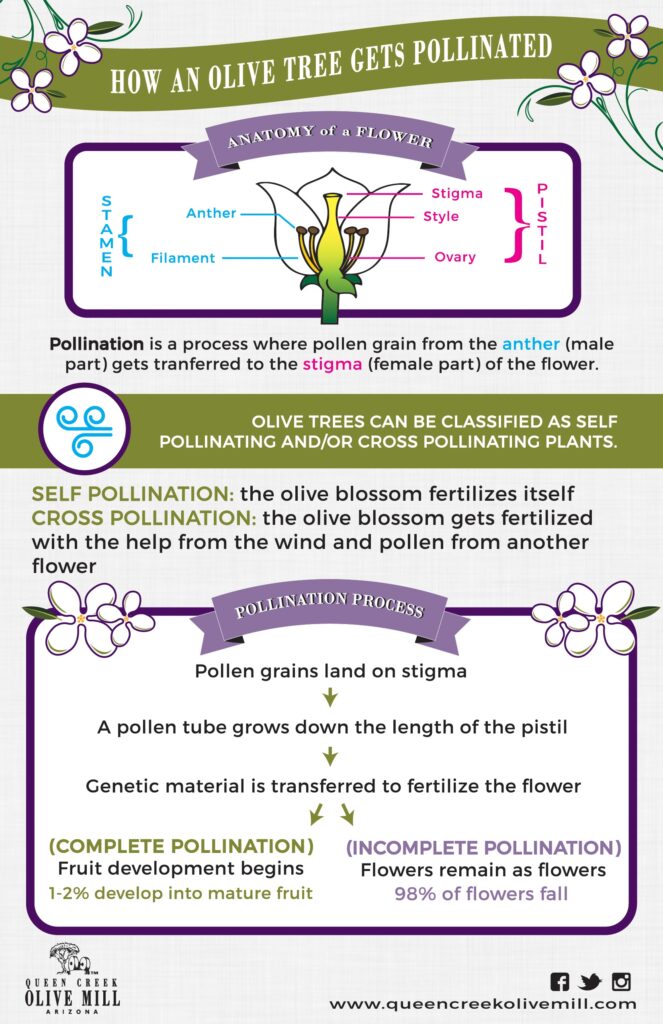
Pollination is the transfer of pollen from the anther to the stigma thereby enabling fertilization and reproduction. There are two main types of pollination called self-pollination and cross-pollination. Self-pollination requires no agent, while wind is an essential part of cross-pollination. Olive pollination occurs by either self-pollination or by cross-pollination, depending upon the variety of the tree.
Self-pollinating olive trees: Frantoio, Koroneiki, Manzanillo
Good pollinators to other trees: Frantoio, Arbequina, Leccino, Arbosano, Pendolino
Olive trees that require a pollinator: Coratina, Picholine (preferable Leccino, Manzanillo)
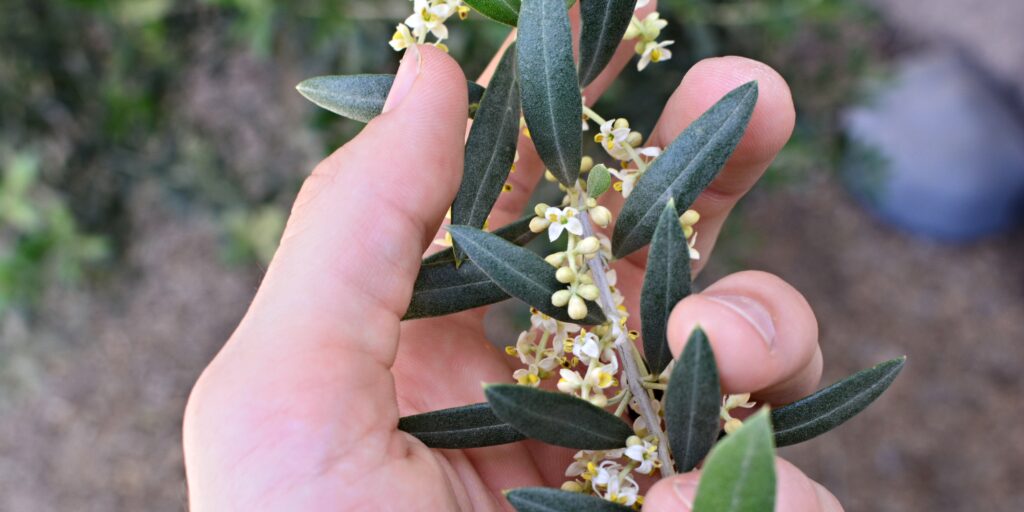
Pollination is important because it leads to the production of fruits we can eat, and seeds that will create more plants. Pollination begins with flowers. A typical olive tree blossoms between March and April giving us dainty, fragrant, cream colored flowers. 98% of these flowers drop to the ground, meaning the pollination was incomplete, and only 1-2% of them develop into fruit.
Here is how an olive tree gets pollinated :
Who knew that 98% of those flowers would never have the chance to turn into plump, bitter olives? We are so grateful every year when we see our trees blossom – and the fruit development that happens in the months to follow. Pollination…it’s a beautiful thing!
Thank you! I’d like to see more of those short explanations.
thanks for the info. Hopefully I’ll get 1-2% on my single tree.
I live in southern Alberta, Canada. Our summers run from about June – late September and are hot and dry temps high 30s C, low teens at night. Winters can be bitterly cold, in the -30s C so our 8 year old Ilive tree comes in about mid October till early to mid May. So far we have had one flower on the tree in mid March. The thrives in the summer a goes somewhat dormant in the winter but does not drop all it’s leaves, although we loose about 20% or so. It live in a south facing window